More than a story about a battle
I’m a big admirer of the Mahabharata. What draws me in is the space it leaves for difficult questions: loyalty, responsibility, ambition, and what happens when duties pull in different directions. A story can stay with us because it resists an easy answer.
What Debroy’s project made available
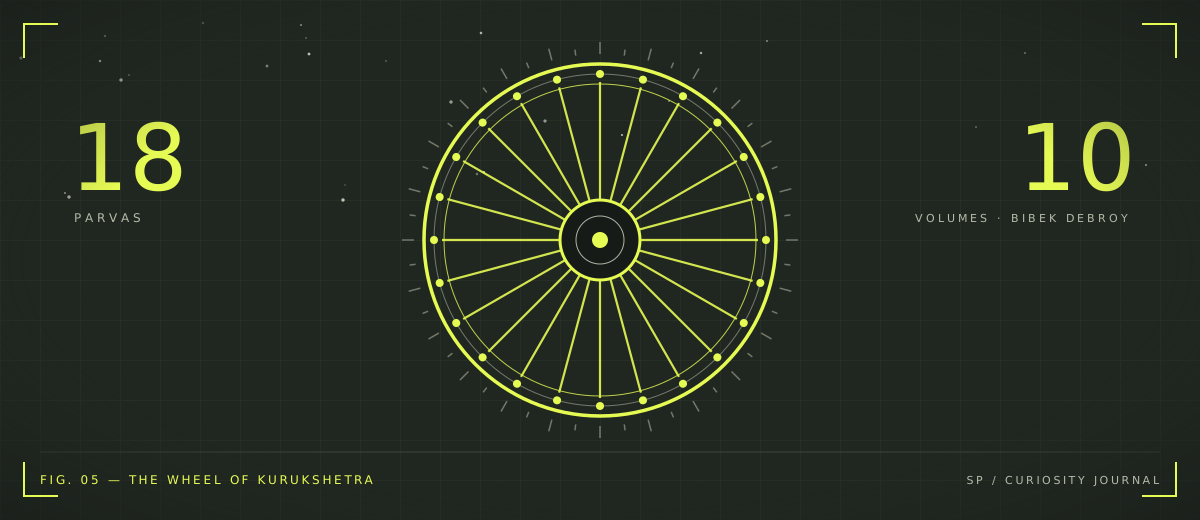
Bibek Debroy’s ten-volume English translation is unabridged and based on the Critical Edition compiled at the Bhandarkar Oriental Research Institute. Penguin describes the work as making the epic accessible to contemporary readers. That is the publisher’s assessment; the concrete achievement is the scope of the translation and the text on which it is based. Source: Penguin’s description of the translation.
Why the detail matters
An abridgment has to choose what to leave out. A complete translation of its chosen edition gives readers more room to encounter digressions, competing voices, and episodes beyond the best-known plot. The Critical Edition is an editorially established text; calling the translation unabridged does not mean it includes every regional retelling.
What I admire
For me, the appeal is the combination of patience and access: an enormous body of literature opened to readers who may not read Sanskrit. I’m interested in the questions it makes available, rather than treating its characters as a neat set of modern management lessons. The story deserves more room than that.
Sometimes a book’s value lies in the complexity it allows you to keep.
Something here sparked another question?
Let’s talk about it