The detail that pulls me in
A new phone can have an impressive spec sheet, but I’m often more interested in the small decision that makes the whole product work. A hinge is one of those details. It sits at the intersection of materials, movement, durability, and the way something feels in your hand.
What Apple has actually described
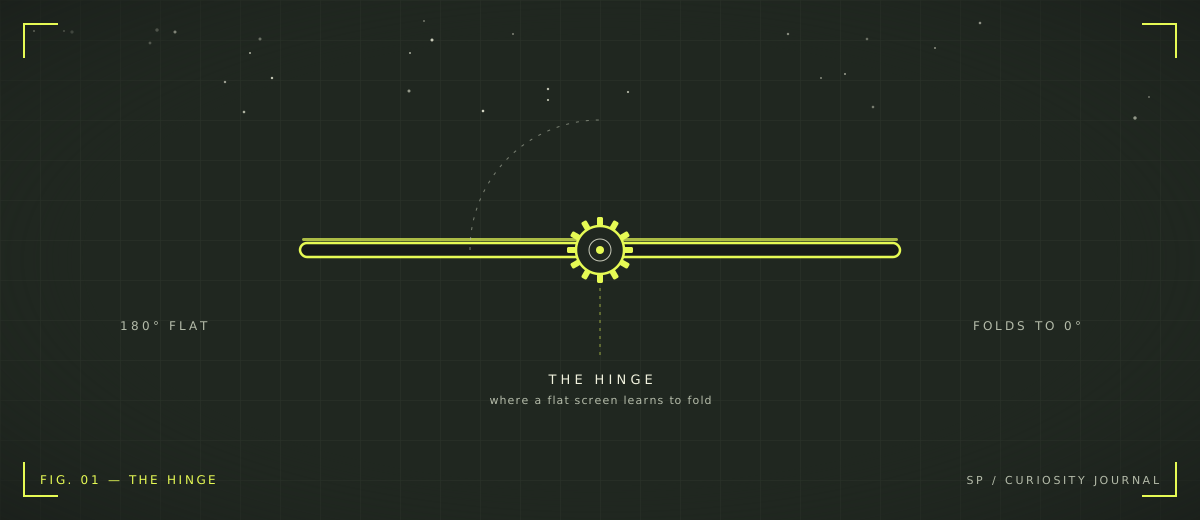
In its September 2026 iPhone Duo announcement, Apple describes a hinge with more than 100 components. It supports the middle of the display when open, while a magnet array helps it close securely. Apple also describes display layers joined with adhesives that let the layers move relative to one another during folding, reducing bending stress. These are manufacturer descriptions, not an independent durability test. Source: Apple’s iPhone Duo announcement.
Why this is a product problem
The interesting question is not simply whether a screen can fold. It’s whether the movement feels predictable, the open screen feels supported, and the experience stays useful after the novelty wears off. Mechanical design becomes part of the interface: the resistance under your fingers communicates as much as an animation on the screen.
The question I’d keep asking
What does folding let a person do better? I’d want to look at the whole experience—opening it, switching between screens, carrying it, and using it repeatedly—before deciding which specification matters most. That is the kind of product thinking I enjoy: tracing a small engineering choice all the way to everyday usefulness.
A mechanism becomes good product design when people can stop thinking about the mechanism.
Something here sparked another question?
Let’s talk about it